Category: Uncategorized

Morning Light

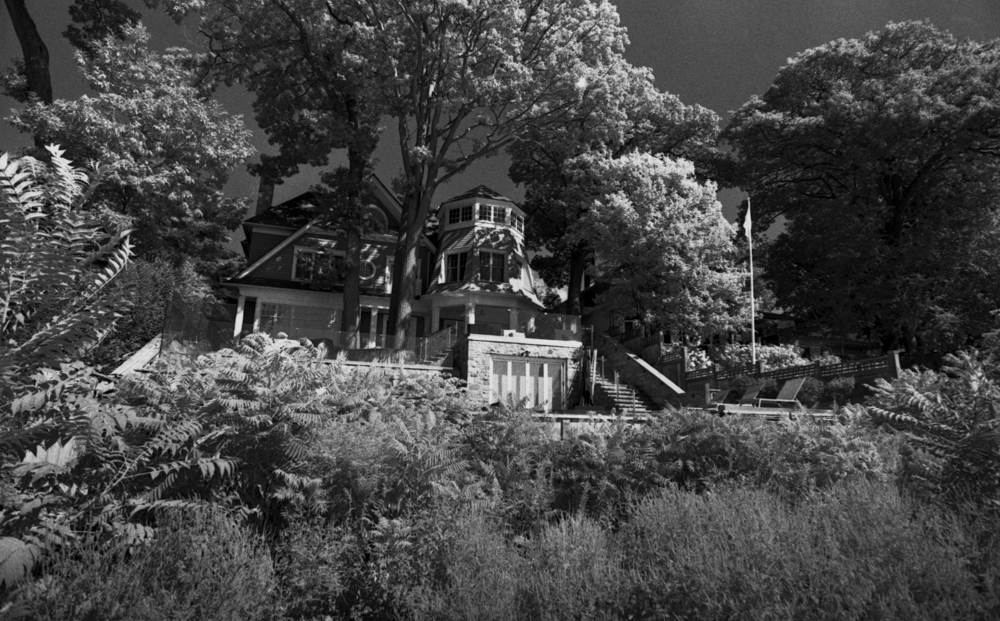
I was out this morning at Todmorden Mills; it was cool, but some amazing light to work with. One of the cameras  I was using was my Mamiya Universal Press, with a 90mm/3.5 lens and a 6×9 medium format back attached. I was shooting Rollei RPX 25, a very slow speed film an with a small aperture the tripod was a necessity for the 1/4 sec or so shutter speed.

12291819_10153138421706987_4144443356453682389_o

Stand developed for 1 hour in Rodinal 1+100 @ 20 C

Autumn

In my opinion, Kodak Ektar 100 colour negative film was made for autumn; there is just something about the colours. This image was taken a couple of weeks ago in High Park with my Canon P rangefinder and 35mm/2.5 Voigtlander Color Skopar lens. I developed it at home with C-41 chemistry from Argentix.ca

12240219_10153133098896987_2921328017193948843_o

Trying Out Rollei RPX 25

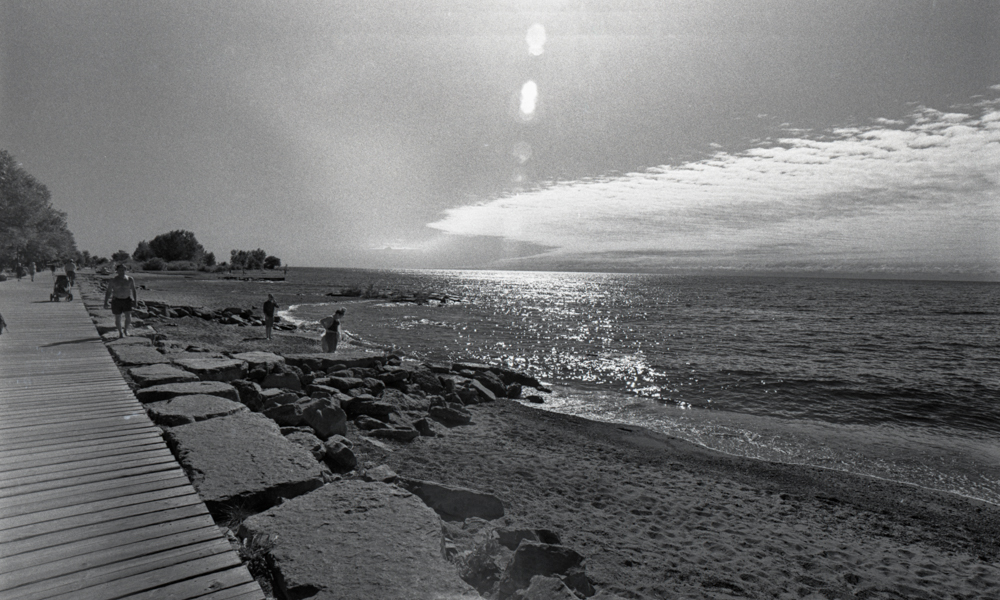
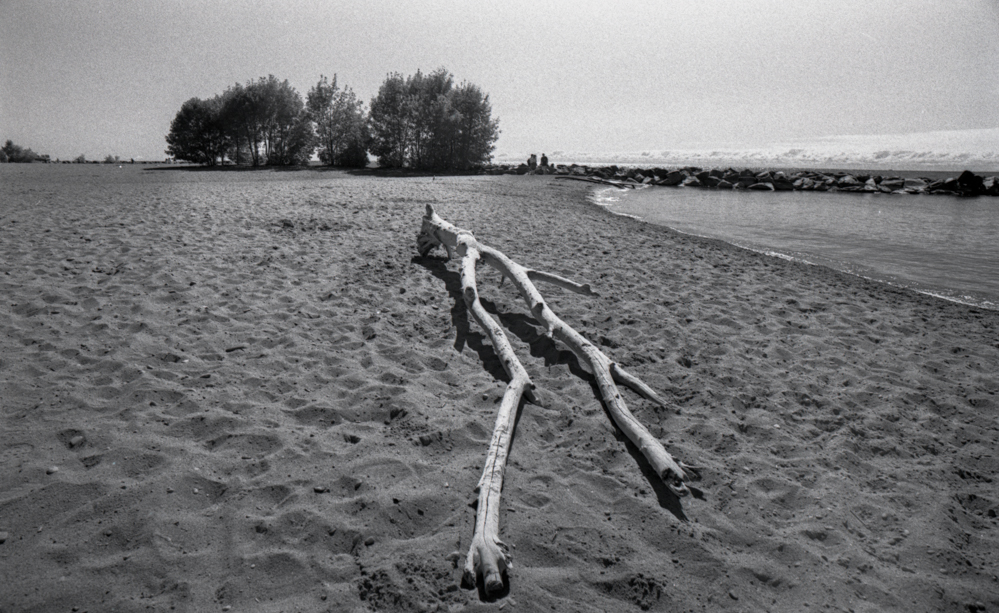
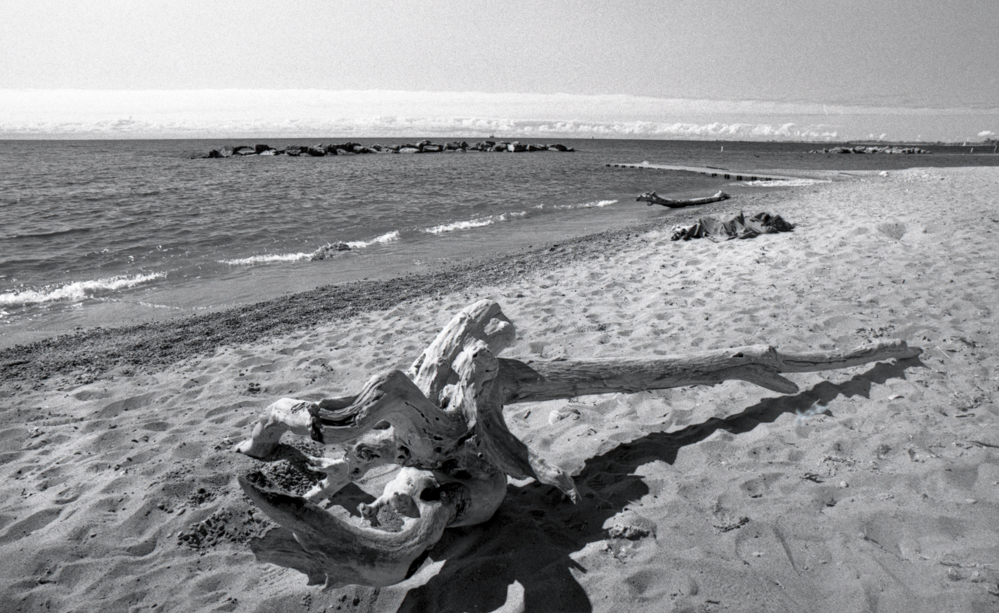
Last weekend I tried my first roll of Rollei RPX 25, a slow, fine grained film. I shot the roll on my Rolleiflex 3.5E3 and I developed the film using Rodinal 1+50 for 14 minutes @ 20 C. High contrast is often a challenge with these slow films, and although the negatives looked contrasty to the eye, I was able to coax good highlight and shadow detail out of them. I will be using this film again!!

RPX 25003
RPX 25007
RPX 25010

RPX 25004

With Friends

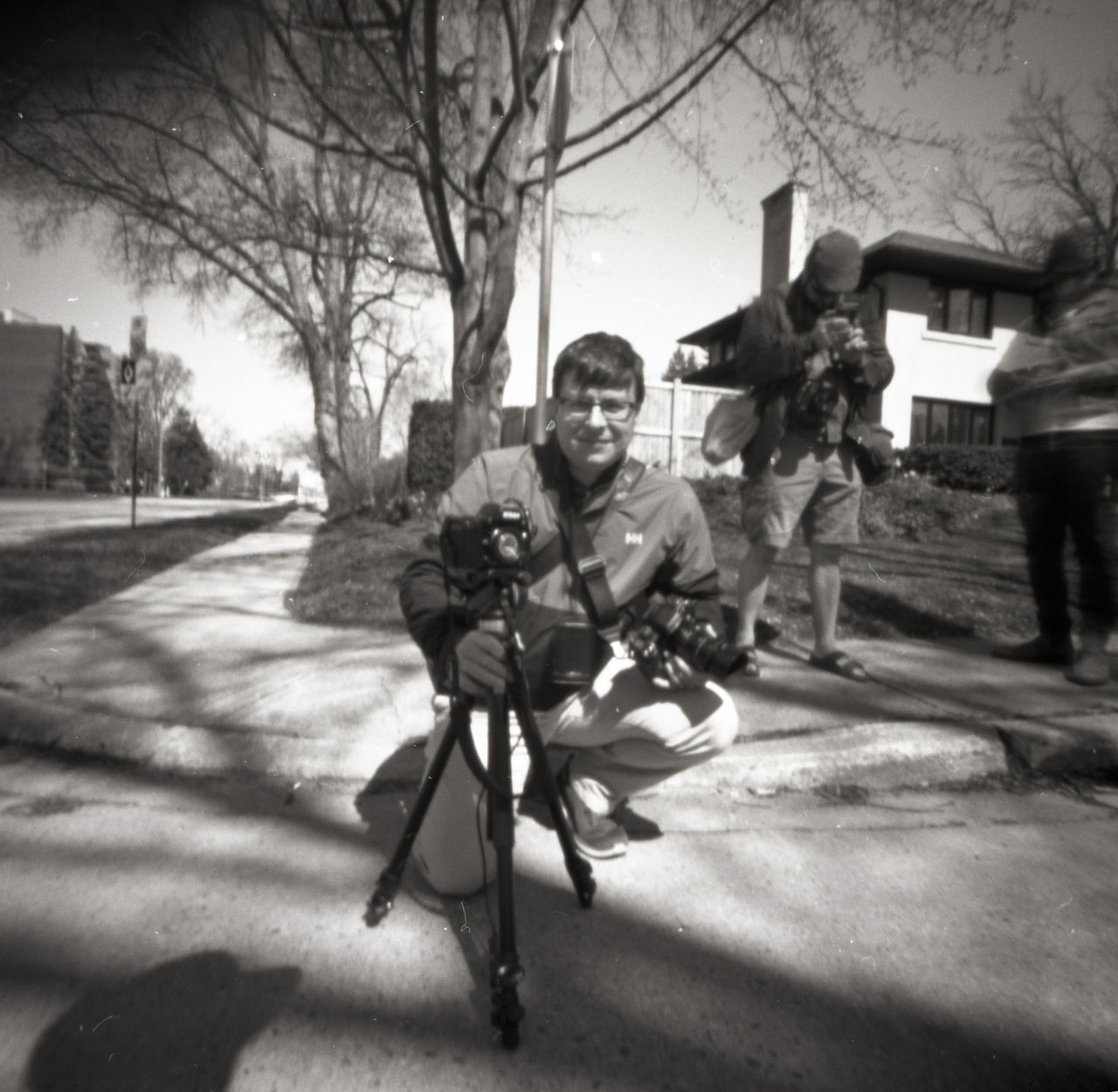
I was out with two good friends Bryon and Ken on Saturday evening, and with me I had my Olympus Pen F 35mm half frame SLR (dating from the early 1960’s) with a 38mm/1.8 Olympus Zuiko lens. The film I was shooting was Eastman Double-X, which is actually meant for 35mm movie camera use. It is not particularly fine grained film, and the smaller half frame negative magnifies this, but I like the gritty documentary look, especially for my friends who have both had interesting lives, with a lot of interesting stories to tell.

Ken

Bryon

The Soul of Scotland

I took a picture of this gentleman outside of Edinburgh Castle. He is not wearing a kilt or playing bagpipes, but to me his expression seems to show the essence of the Scottish character.

Outside of Edinburgh Castle

Rolleiflex E3, 75mm/3.5 Xenotar lens
Tri-X developed in Tmax Dev 1+4, 6 minutes @ 20 C


Working on My Story: Part 3

I am going to post one more snippet from the urban fantasy story I am working on. Previous snippets available here and here. Over the next few weeks  I need to focus on my upcoming exhibition in April, so it will likely be some time before I post some more from the story. I am jumping out of sequence with this sample from my story “Sideways” but even if some of the details don’t make sense out of context I think the main points are still clear enough 🙂

From “Sideways”:

The image in the print slowly began to emerge in the developer tray as Darcy rocked it gently back and forth, bathing the print in the solution. The image that appeared was that of a female creature, superficially human-looking, but Darcy could tell it was something different, in so many little ways; ways that maybe ninety-nine out of a hundred people might not notice, but now he couldn’t help but see the signs. Again, he didn’t know how he knew, but he knew.

And the creature was old. So old. Her face was seamed and scarred, radiating the sad fatigue of a soul that had seen so much, suffered so much, and sacrificed so much. Her hair was thin and wispy and its colour was the grey of an endless winter day. Darcy could see the echo of a past beauty in her, but long absent like the half-remembered dreams of childhood. Darcy sensed a deep loneliness as well; had she been forsaken by those for whom she had given so much? (Again Darcy wondered: how did he know all this? It did not feel like idle speculation.) He looked away from the image for a moment, but felt pulled back to look at it once again.

Her eyes were strong. In the midst of weariness and decay, they contained an undeniable strength, faded perhaps, but not clouded over. Darcy knew they were Elena’s eyes. Darcy felt the breath catch in his throat, and the image which had been tack sharp began to blur. He tried to blink away the tears, but one drop broke free and fell into the developer tray, as if it were going home. When he had developed the negatives for this roll, without knowing precisely why he had omitted adding a drop of blood to the developer; perhaps taking a risk and trying to provoke a punishment? Maybe a tear would have a different effect. He pulled the print from the tray of developer and placed it in the stop bath for a few seconds, then transferred it to the tray of fixer. After sixty seconds, the fixing done, he transferred the print to the wash tray, and stood, staring bleakly at the image rinsing under a stream of water. He had fallen for Elena, hard, and seeing the power and the tragedy in this image, who was he, an accidental bystander, a mere observer, a tourist in the larger reality Elana and Merson inhabited, to even think he had a chance with her. He tasted ashes in his mouth. You pathetic fool, he thought to himself in silent bitterness. You took the picture, now see the result. Another friendship you ruined by your impulsive selfishness. If there is anyone who deserves to be alone it’s you, he told himself. Not her. She deserves the happiness that you don’t.

Darcy started as he felt a hand touch his shoulder, and he did not need to turn around to know who it was. He sighed, and turned to see Elena before him. Where he expected anger, or at least reproach, he saw sadness. Her eyes were also shining under the red darkroom safelight. There was no recrimination in her face, and that just seemed to make it more difficult for him. He felt an even stronger flush of shame in his face, but it did not stop him from asking a question; his curiosity still won out.

“Who are you?” Darcy asked. The question was not an accusation, rather an admittance of awe on Darcy’s part. “Do I even have the right to ask you that question?”

“I have another name, Eye.” Elena replied softly, after a time. “I have been called Heart, and you have seen my Sideways aspect. Where you have true sight, I have true feeling, and have felt the sorrows and pangs of so many, for so long. Love and sadness both resonate within me, but after a time, the love always seems to fade. The sadness remains though, like black ink on a page where all the other colours are gone. And then are all gone, Eye. Forgotten, lost, they have forsaken me. Will too you now turn away?” She pulled herself up straight, seemingly bracing herself for a blow.

Darcy took her hands in his. “If I am the Eye, then I have seen you truly. How could I feel anything but love for you?” He wondered at himself that he even found the courage to say these words. “But what would you see in me?”

The response was a gentle laugh, not mocking but knowing, understanding. “If your name is the Eye, you are blind when it comes to yourself. I look at you and see hope. You are making me feel like smiling, truly smiling, and this is something I have not felt in some time. But you have seen me as I am, and who would have me as I am?”

Feeling in a dream, Darcy answered simply “I would.”

“But I am old,” she said.

“Ageless,”responded Darcy.

“Ugly,” she persisted. Her eyes were shining more strongly now.

“Never to me, “ Darcy responded gently, “Never to me.” He leaned in and kissed her, allowing one hand to gently brush her cheek. He felt her tears on his hand, and when he pulled back he felt the wetness on his own face, from more than just Elena’s tears. Any hesitation gone, he drew her to him, and he felt rather than heard her smile as she held him tightly in return.

Together, they turned to leave the darkroom and go upstairs. Darcy turned off the darkroom light as they left the room.

If the light had still been on, and there had been eyes to see it, they would have seen, or perhaps felt they had imagined seeing, a small smile emerge in the image of Elena still sitting in the wash tray, looking for a moment at least just a little less heartbroken.

Later, as he lay beside Elena, a thought, a concern arose unbidden to Darcy. He raised himself on his elbow, and regarded her for a moment before speaking.

“What of Merson” he asked Elena, quiet but awake beside him.

Again, the gentle laugh that did not mock. “What about him?”

“I saw you hold him, kiss him.” Darcy said.

“Should not a mother love her son?”

Darcy didn’t think there was any room left for more surprises, but again he was wrong. Again he silently called himself a fool, but this time it was with an undertone of joy.

“He is lucky to have you as a mother,” he said, a bit awkwardly.

“Hopefully he’ll take to his new stepfather!” It almost sounded like a giggle when she said it. And Darcy heard himself laugh in return.

Those Swirl the Days

I love photo gear that imparts character to images, and this is one area where vintage film gear beats digital. This image was taken with an old Soviet-era Zenit 3M SLR, and a 58mm f2 Helios 44/2 lens. A Russian copy of the Zeiss Biotar lens, when stopped down to a small aperture it is quite sharp, but when used wide open (as it was in this image of my friend and fellow film fanatic Ori) you can get an amazing “Swirl” in the out of focus areas, especially away from the centre of the frame.

Shooting film

Zenit 3M SLR, Helios 44/2 58mm/f2 lens
Tri-X developed in Pyrocat HD 1+1+100,16 minutes

Working on My Story, Part 2

Here is the next little bit of the story I’m working on. NOTE: If you haven’t read part one, read it here first! All feedback/comments gratefully received!

Darcy dashed home (a nondescript semi-detached house a few blocks away) with his prize. He pulled the camera out of the bag, picked up a roll of the vintage Agfa Pan film and removed it from its faded but still intact wrapping. Using a thumbnail he slit open the old paper tape that sealed the roll. He opened the back of the camera, hoping there would be an empty take-up spool (even those were expensive collectables these days!) and smiled in relief when he saw that yes there was one there. He transferred the empty reel to the take-up position, loaded the roll of film into the camera and threaded the paper leader, then closed the camera back and wound the film to the first exposure.

The camera had a beautiful feel; despite its age, the lubrication of its mechanism had not dried up, the lens focus and the film wind were smooth and supple. Darcy had purchased cameras in the past that had obviously spent decades on a shelf or in a box, or had been heavily used by photojournalists, and it often took a lot of work to get them into usable condition. This camera had obviously been taken care of and it felt alive and responsive in his hands, like no other vintage camera had before. He literally couldn’t wait to start shooting with it, so he grabbed his coat and headed out.

He decided to go back to the same area where Bill’s SecondHand Shop was located. It was a gritty, eclectic place, simply referred to as “The Neighbourhood”  by its collection of eccentric characters who seemed to go through life on an angle, twisting reality to suit their purposes, utterly unaware or uncaring at the oddity they projected. Darcy loved taking pictures here: despite his own nondescript, average appearance, decidedly non-eccentric,  he felt more at home with the people of this neighbourhood then he did with the people at the office where he worked.

When he arrived  he went to an old bench in a street corner parkette at one end of the Neighbourhood. The iron of the bench was rusted, despite many layers of paint, and the wooden slats were grey and textured, any paint or stain just a distant memory, worn away by the weather and passersby. On the bench was sitting an old man with a long white explosion of a beard, and only a few meagre strands of hair, like stragglers leaving a party. His face was seamed and wrinkled and his textures matched those of the bench: a perfect pairing for a picture. Normally, Darcy tried to take his pictures like this in stealth mode; he envied those street photographers who would just go up to strangers and ask if they could take their picture, but today for some reason he felt emboldened, and to his own surprise he heard himself asking if he could take the man’s photo, and to his greater surprise heard the man say yes. He estimated the exposure settings, framed the image looking down into the small viewfinder, and clicked the shutter button. The shutter made a quiet but authoritative sound when it fired. Darcy asked to take one more, and moved back to get more of the bench into the image. He reframed the image, and clicked the shutter button. A couple of other people in the background had ended up in the frame, but he didn’t think it would matter, and he didn’t want to press his luck so he said thank you and moved off. Darcy finished the rest of the roll framing shoppers and Neighbourhood residents strolling around in front of various faded shops, then went on his way home, to develop it. He walked again past the old man on the bench, gave a quick wave, and quickened his pace: he couldn’t wait to see how the film would turn out!

Once Darcy had left, the old man looked up at his retreating figure and gave a small, sad and knowing smile.

As soon as Darcy arrived back home, he went immediately to his basement darkroom: a rather cramped and dingy space, containing random boxes of photographic paper, various developing tanks, measuring flasks and cylinders, and many bottles of different darkroom chemicals. On the walls were pinned random prints of images he had thought were worth printing, but in the end not worth framing or showing to anyone. Darcy stood for a moment with the roll of film he had shot in his hand. What would this combination of film, camera and developer bring? In the past on more than one occasion Darcy had discovered that an antique camera was defective, or old film was longer sufficiently sensitive, or that chemicals he had bought had gone off. Darkroom disappointments had a way of keeping one humble, and he hoped that everything would work this time around.

Darcy took the old bottle of Rodinal developer that had come with the camera and film. The label on the bottle was yellowed and discoloured, and many layers of dust covered the brown glass. He tried to unscrew the bottle cap and found that it was stuck in place, probably from not having been opened in decades. He applied more pressure with his right hand and eventually the cap gave, with a strange cracking noise that seemed louder than it should have been in the basement quiet of Darcy’s darkroom. It sounded almost like the echo of something awakening. Darcy paused for  moment. Why had that thought occurred to him? He shook off the feeling, and went back to unscrewing and removing the bottle cap. Just for a second Darcy thought he felt a slight stir in the air behind him, as if someone or something had moved silently behind him, watching. He turned, but saw nothing, so he turned back to his task, again feeling vaguely rattled.

He measured out 10 millilitres of the Rodinal developer into his graduated cylinder. The old liquid was as dark and opaque as India ink. He took the cylinder and poured it into a container  of water he had measured out before, and immediately things started getting strange: normally, developer added to water would dilute instantly, but this time as the developer began to dilute in the water he thought he saw the mixture start to ever so slowly turn and stir of its own volition, before he had even reached for his stirring rod. Within the water, instead of mixing instantly it seemed as if tendrils of the developer were forming the fingers of a large skeletal hand, pointing at him as the mixture turned lazily. Darcy looked at the mixture, transfixed, and sensed a presence, a patient malice that he had somehow invoked by opening the bottle. Shaking his head at himself and wondering about his imagination, he quickly stirred the developer water mixture thoroughly and set it aside.

Darcy placed his developing tank, lid and film reel in front of him on the bench, reached into his pocket for the roll of film and turned out the lights in the darkroom, as this part of the developing process required total darkness. In the dark, operating by touch, with a practiced hand he unfastened the seal on the exposed film and unrolled the paper backing until he felt where the film was attached to it. He pulled the tape off and removed the film from the backing, then felt on his bench for the developing reel, to spool the film onto it.

Again he felt the movement of air behind him, slightly cooler this time, like the backside of a talon running slowly and lightly, almost teasingly across his shoulders, feeling menacing and delicate at the same time, like he was being toyed with. He turned but of course in the total darkness of the darkroom there was nothing to be seen. He turned back to his task and carefully spooled the film onto the developing reel,  placed the reel in the developing tank and put on the lid. He then turned on the lights, to complete the rest of the film developing process.

Dazzled by the momentary brightness, Darcy thought he say a shadow, a shape, maybe eyes, in the corner of his darkroom, but it was gone in a moment, and was so transitory that it was easy for Darcy to convince himself that he had seen nothing. Of course he had seen nothing.

Darcy completed the rest of the development process: twelve minutes in the developer, a one minute water rinse, and then six minutes in the fixer. After he had poured the fixer from the developing tank back into its bottle, he removed the lid from the developing tank. Did he hear a slight sighing sound as he did so? Like releasing a captive presence …. No! He thought to himself. Why was every sound, random air current and trick of the light unsettling him today? Again pushing the unease to the back of his mind, he removed the spool from the tank and looked at the negatives. A smile arose, and he exhaled, not even aware that he had been holding his breath. The negatives looked perfect, almost better than they should have from such old film! The prints were sure to be fantastic! He put the reel back in the tank, and put the tank under the running tap for the final twenty minute water rinse. Leaving the running tap to do its work, he went back upstairs, all his uneasiness forgotten.

Working On my Story

No images today, but since the urban fantasy story “Sideways” that I’ve been working in is definitely film-photography related, I thought I might post the first portion online for fun (of course feedback is welcome as well!) This is a small part of what’s been written so far.

Sideways

“Can you still get film for that camera?”

Darcy Callum sighed at the voice that interrupted him, as he looked up from the viewfinder of his 1950’s era Rolleicord twin lens reflex camera. He had been composing an image but the moment had passed, and the chance for taking a good photograph was gone. He had observed a young couple sitting together outside a cafe on a bench of weathered wood and intricate but rusting wrought iron, framed by the golden leaves of a Maple tree on a mid-fall day. The couple were sitting close together, hand in hand, oblivious to him, indeed oblivious to everything and had eyes only for each other. It would have made a great image, but now they were getting up to leave. (Love was always getting up to leave when he was around he observed ruefully,  even when it wasn’t his).

He looked up and regarded the source of the interruption. “Yes, no problem at all getting film,” he replied to the twenty-something man with a digital camera dangling from his neck. The young man was looking quizzically at the antique camera hanging around Darcy’s own neck by  a very worn but still sturdy brown leather strap.

“But isn’t digital better? Why do you still shoot film?” the young man persisted. He wasn’t being particularly dismissive, so Darcy prepared to launch into his standard response. It was well-rehearsed; he had had this conversation many times before. As he spoke, he appeared to fondle his vintage camera lovingly but only half-attentively, twisting the focus and adjusting a couple of dials in a way that seemed absent-minded.

“Digital may be more convenient perhaps, probably cheaper, but I love using these old cameras and the film,” he replied. “The cameras are a lot of fun to use, and I really like the results.” Darcy didn’t think the young man was buying the explanation.

“But how do you know if you got the picture right if you can’t look at it right away?” the young man asked. He seemed genuinely mystified.

“Like anything,” Darcy replied, “practice. Remember it wasn’t that long ago that all photography was on film; and we didn’t have any choice…”

The young man was starting to lose interest. “I am so glad those days are gone” he said, as he turned and started to move off. Darcy sighed again; whenever he went out shooting with one of his older film cameras he always got the “can you still get film” question, sometimes from someone who was reliving fond memories of using an old camera (he liked talking with these people), but more often than not it was someone whose photographic horizons did not expand much past taking selfies on an iPhone. Someone had once shouted at him “The 50’s called and they want their camera back!” His response had been to call back “The land of the ignorant called and they want to know when you are coming home.” He didn’t get the stinging reaction he had been hoping for, as he recalled. As for this young lad, Darcy was smugly amused that he, a thirty-something, slightly pudgy and unremarkable man had been able to take a couple of candid shots of the young man, shooting from the hip while talking with him, with the young man being completely oblivious to the fact. You still have the touch, Darcy told himself.

As it turned out, the two pictures he took of the young man were the last frames on the roll, and seeing as it was now finished, Darcy decided it was time to head along to one of his favourite shops, Bill’s Second Hand, since it was only a five minute walk away. He started walking and soon he could see the faded yellow and black store sign, the familiar blue door, paint peeling, slightly ajar, and in the stairs leading up to it, depressions worn into each step by countless customers over the decades of the store’s existence. He walked up the steps, his hand sliding along a wooden railing smoothed in the way that only time and hands could accomplish, and pulled the door the rest of the way open, listening to its familiar complaining creak, and went inside.

It was the kind of store where you had to turn sideways to snake down an aisle, with boxes bulging with the remnants of the past piled in high tottering columns on either side. Darcy wondered what would happen if a customer asked for something in a box in the bottle of a pile, how would the the proprietor of the store even move merchandise out of the way?

Darcy came to the part of the store he called “camera corner”. With the advent of digital photography, fewer and few people were even using film cameras, and it seemed a lot of these unused cameras ended up in this store; Darcy would go in every couple of weeks and there always seemed to be something new, or at least different, but the pickings today seemed rather lean; Darcy saw a few more of the seemingly infinite supply of Kodak Box Brownies that seemed to inhabit the world; at least this store did not try to get $100 for a 10 dollar camera, like so many other antique stores. He also noticed a couple of Argus C3 “brick” cameras, likely sitting idle for decades since they had recorded their last graduation, wedding, birthday or Bar Mitsvah.

He was about to turn away when he saw a battered leather camera bag that seemed to be a recent arrival. He fussed with a buckle to open the main compartment and his eyes widened as he saw what was inside: a Vest Pocket Exacta, a German camera from the the 1930’s, highly collectable, beautiful in an art deco kind of way and in mint condition. And the film! He counted at least 30 rolls of Agfa black and white film, in the long discontinued 127 format. 127 shooters had resigned to paying a small fortune for the remaining film stock online, and there was so much here that it was likely worth more than the camera (which itself would be worth at least three hundred dollars to the right buyer). Finally, wrapped in wrinkled tissue paper, a large,bottle of Rodinal film developer liquid that was at least a hundred years old. The label was stained and torn, but the Agfa label was unmistakable. Unlike most darkroom chemicals that went bad after a year or less, Rodinal was reputed to never go back, and film geeks would talk about developing film with century-old Rodinal in the same way Scotch drinkers would wax rhapsodic over a rare single malt.

Darcy hand never made a find like this; he had to buy it. He put everything back in the bag, picked it up (it felt surprisingly heavy) and took it to the front of the store.

The owner Bill seemed distracted today; Darcy waited to get his attention.

“How much for this?” he asked. (Nothing in the store had a price tag on it; that would have made it too easy, and Bill always seemed to like haggling. Darcy hated it; he preferred price tags and a quick payment).

“What?” Bill replied, his eyes looking up  from up a column of handwritten figures in an old account journal. (Bill put computers in the same category as price tags when it came to his store). Bill looked at Darcy briefly, then at the camera bag, then back at his column of figures. He sighed as if he had lost his place and said “40 bucks” without looking up further.

Darcy did his best to maintain a poker face; on eBay the contents of the camera bag would fetch at least $600, although Darcy did not want to resell this treasure). He took out his wallet and saw to his chagrin he only had thirty-five dollars in cash, and a store that didn’t use price tags or computers was not going to accept a credit card. Darcy still remembered the sound of Bill’s laugh when some hapless customer once asked to pay with a debit card.

“I only have thirty-five on me – can you give me 10 minutes to go to get some more money?” Darcy knew he wasn’t the only film photography junkie in town. He had once missed out on a pristine Rolleiflex 2.8F camera by 15 minutes and he wasn’t going to let that happen again. Just then Bill’s black rotary dial phone rang, with a mechanical bell sound that one only heard these days as a retro ring tone on iPhones carried by hipsters. Bill, distracted, picked up the phone and answered, seemingly oblivious to Darcy. The phone conversation did not seem to be going well, and Bill seemed to be having trouble getting a word in. Hi finally turned to Darcy, looked at the cash in his hand, and said “Fine, I’ll take what you have” and grabbed the cash and then turned back to the phone.

Darcy stood for a moment, disbelieving his luck, then turned to go quickly home with the camera bag. He wanted to get out in case Bill changed his mind!