This past Sunday I was out with my friend and fellow film enthusiast Bill Smith, and took a few portraits. For this one I used my Kodak Medalist camera, with respooled Tri-X film, developed in Ilfosol 3.

This past Sunday I was out with my friend and fellow film enthusiast Bill Smith, and took a few portraits. For this one I used my Kodak Medalist camera, with respooled Tri-X film, developed in Ilfosol 3.
I tend not to do a lot of bird photography, but this caught my eye this past Saturday down at the Beaches.

Mamiya RZ67, 180mm Mamiya Z lens
Red Filter
TMax 100 film
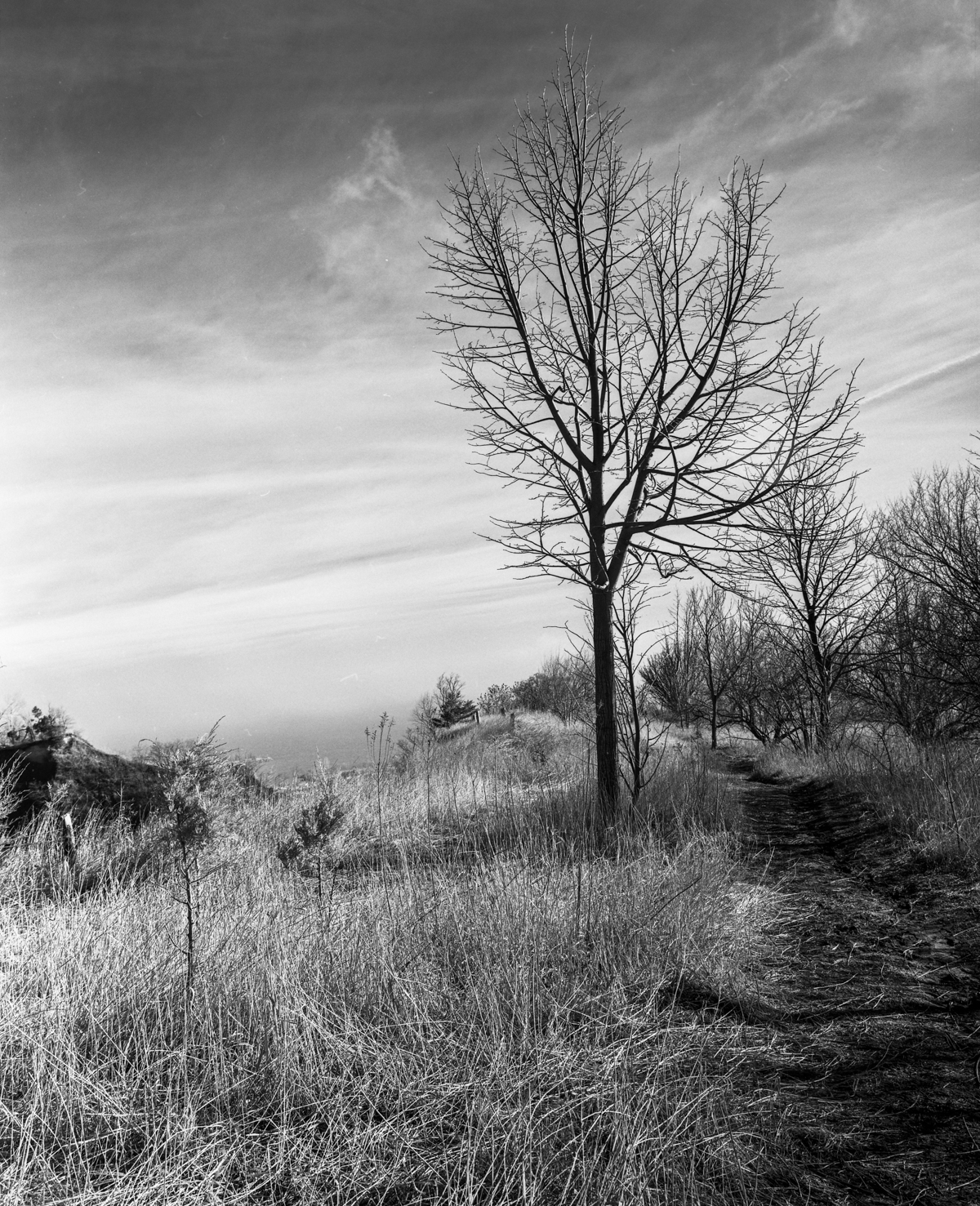
For some reason, I’ve never shot on top of the Scarborough Bluffs before; I went for the first time on Saturday morning to Cathedral Bluff, with my Mamiya RZ67 and 65mm/3.8 wide-angle lens and Rollei Retro 80s film. I’ll definitely be back!

Yesterday I had a lovely shoot with my friend Zoe. I shot two cameras, my newly acquired Hasselblad 500 C/M, and my Mamiya RZ67. Both make great portrait cameras, and on a tripod the weight difference makes no difference. A portrait is not about the camera though, and just like last time, Zoe gave some beautiful and interesting expressions. More to come 🙂
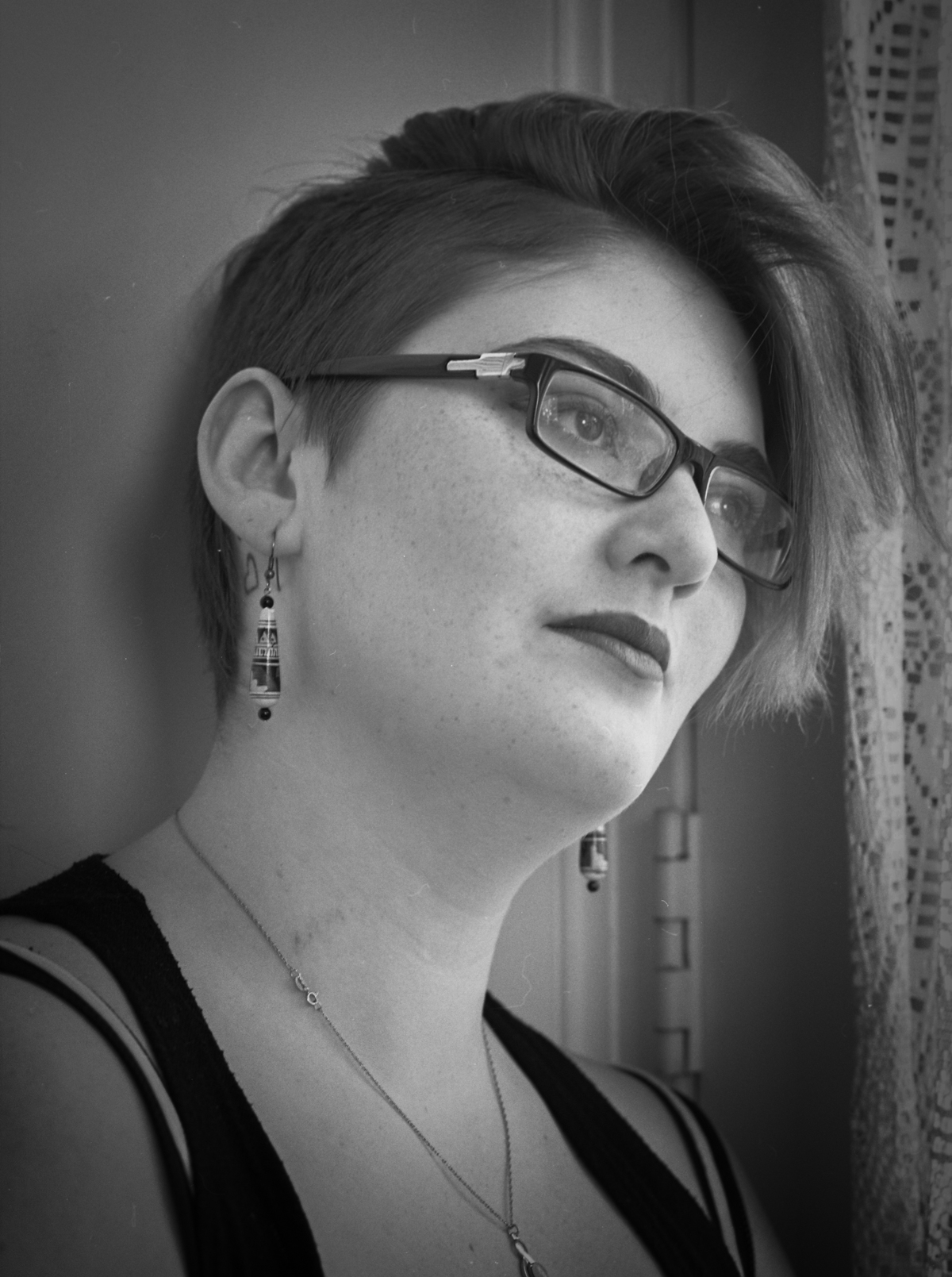
Mamiya RZ67, 127mm/3.8 lens
Kodak TMax 400 film, developed in TMax Developer
I went to another exhibit today, this one at the Art Gallery of Ontario. With the title of Outsiders: American Photography and Film 1950’s to 1980’s, this exhibit featured the work of photographers Diane Arbus, Nan Goldin, Danny Lyon, Gordon Parks, Garry Winogrand, attendees of Casa Susanna, and filmmakers Kenneth Anger, Shirley Clarke, Robert Frank and Alfred Leslie, and Marie Menken. I think the description from the AGO exhibit web site sums up the exhibit best, in how it describes the motivation of the artists:
“Motivated by a sense that the status quo was untenable, and that current visual expressions of American life did not reflect what they knew and saw of the world, they deployed their chosen media to reflect a more complex, more authentic and more diverse view of the world in which they had grown up.”
I can’t give an an exhaustive review — too much to take in, and I will definitely be going back multiple times, so I will just give a few impressions of what really struck me:
The work of street / event photographer Garry Winogrand was striking. Using a wide-angle lens and a 35mm camera, his images are full of movement and dramatic angles. Even images that might look random and haphazard at first glance, are anything but if you look at them closely; they all have a Cartier-Bretonesque “decisive moment” sensibility about them. On one wall of the exhibit, his prints have been laid out close together in rows, like a contact sheet writ large. From a technical point of view, the silver-gelatin prints are universally excellent.
Next I want to talk about the work of African American LIFE photographer Gordon Parks. His photographs of Harlem, and the bitterly difficult lives of its residents are hard-hitting, brutally unflinching, yet containing moments of tender thoughtfulness. The lighting is often very dramatic and contrasty, but the prints do the images justice, with beautiful shadow detail and a long tonal scale. What is really interesting about the presentation of his work is that includes actual copies of the LIFE Magazine issue that contains his Harlem photo-essays that visitors can leaf through to get a better sense of the historical context in which Parks work was presented.
The work of Diane Arbus will perhaps be most familiar, and her famous images such as that of the young twin girls, and the young boy with a toy grenade are present. The is some variability of the print quality here, but not enough to take away from the power of Arbus’ vision.
Finally, what struck me was the collection of photographs from Casa Suzanna, a refuge for heterosexual transvestites in the 1950s/1960s in New York State. The presentation of original; “snapshot” sized prints, many with inscriptions, brought home the sense of community. This collection features a number of Polaroid instant as well. The Instant print process was popular, as it lessened the risk of being found out and ostracized.
For the exhibit overall, the feelings I sense are humanity and an incredible compassion on the part of the artists. Drug-users, drag-queens, the poor and marginalized, circus freaks etc. are all able to show their humanity, and overcome, even for a moment, the labels and unfair categorizations society had thrust upon them.
This exhibit is must see. For so many reasons.
The exhibit runs from March 12th to May 29th at the Art Gallery of Ontario in Toronto.
I just got back from this exhibition at the Ryerson Image Centre, and quite frankly I am amazed at the quality of the work of Wendy Snyder MacNeil (b. 1943), and the impact it has when seen in person.
The first prints I looked at were from the Boston Open Air Market, taken in 1968-70. What struck me was the darkness of many of these prints, but the darkness contained a lot of shadow detail and subtle tonal variations, deep and rich, never muddy. I believe the impact would best be experienced by seeing the prints in person; I just don’t see how a reproduction (even a high quality one) could do full justice justice to the richness of these silver gelatin prints.
The next images I looked were a series of portraits of hands, printed using the platinum/palladium printing process on very thing tracing velum. The prints were almost three-dimensional, with a beautifully long and soft tonal scale, with a lot of detail, but never harsh or clinical in appearance. These images were exhibited in a very straightforward manner: the thin tracing vellum attached directly to the wall with a pair of white pins. No glass. Added to the immediacy of the work.
Next I looked at what I considered the the highlight of the exhibition to me: a series of close-up portraits from the late 70’s to early 80’s. The were created using 6×6 cm medium format film, and like the hand portraits, printed on tracing vellum us the platinum-palladium printing method. Like the hands portraits, the prints were soft and organic, while at the same time detailed. Expressions showed a direct connection between the photographer and the person being photographed. The mood of the subjects appears often to be complicated, deep and subtle all at the same time. In some I sensed the conflict between being guarded and being vulnerable.
Some contact sheets were also on display, and it was quite striking to see the contact prints and then look at the enlargements, and how her printing process brought the images to life. The negatives by themselves were not a complete work; the printing process was a necessary part of the process.
There were also a series of images in the theme of album pages with multiple collected images in a single. Ineresting, but did not has as much of am impact on me as the portraits did. The other series of images I wanted to mention was Irish Tinkers, from 1968-70. These are portraits and images of a documentary nature, of proud people living a challenging life. These prints were behind glass which to me affected their immediacy, but still very powerful nonetheless.
This exhibit to me underscores the importance of seeing film based, hand printed photography in person. Seeing this work in a book (even the high quality exhibit catalog, which is a steal for a $10 donation) or (shudder) on screen is just not the same.
At the Ryerson image Centre in Toronto until April 10, 2016. Free admission
I finally broke down and got a Hasselblad. Because I am on a self-imposed new gear diet for 2016, the only way to make this happen was to sell some gear. It was a difficult decision, but I think the Hassy and I will get along just fine 🙂

Toronto Beaches, Hasselblad 500C/M, 80mm/2.8 Planar lens
Acros 100 film developed in Rodinal
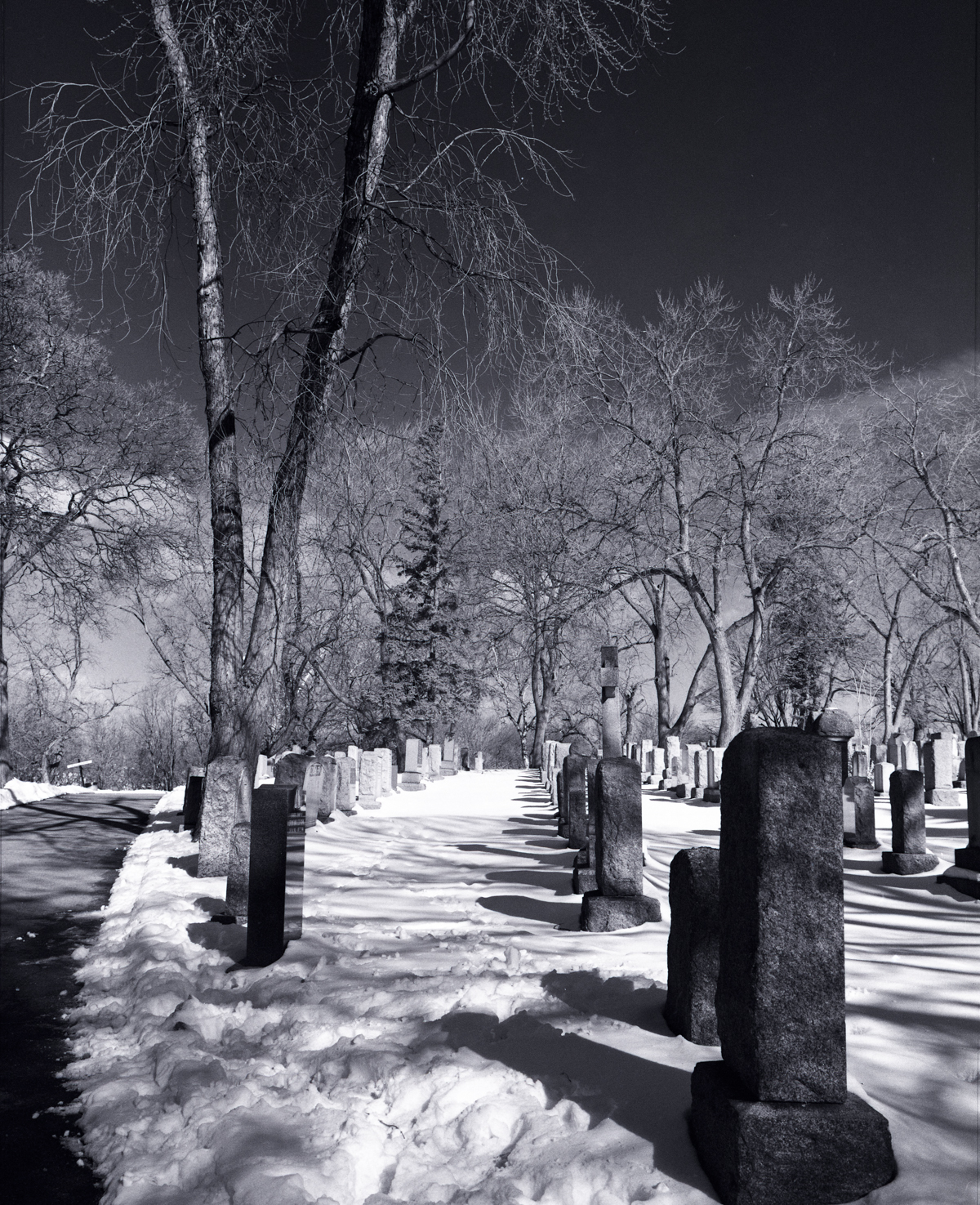
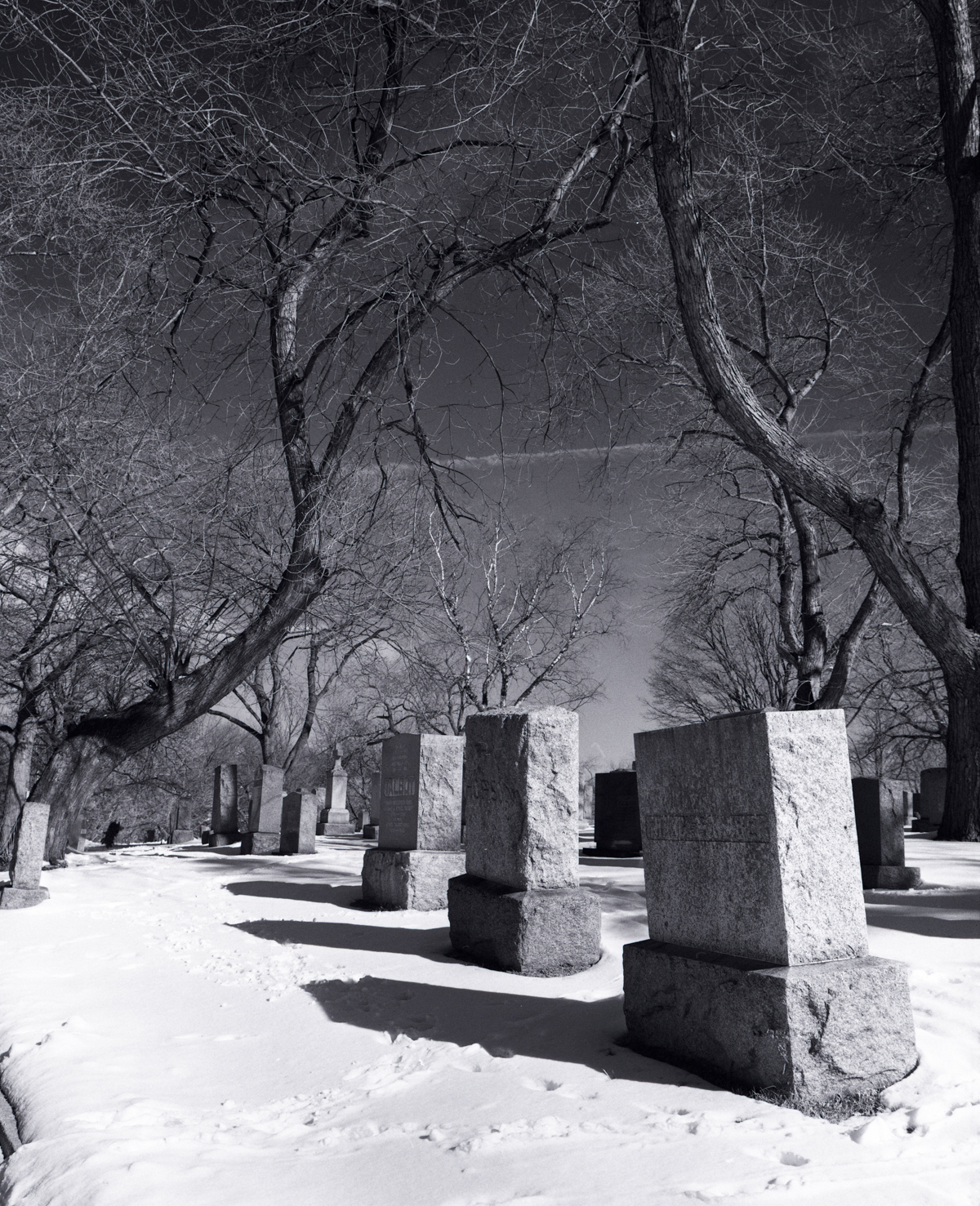
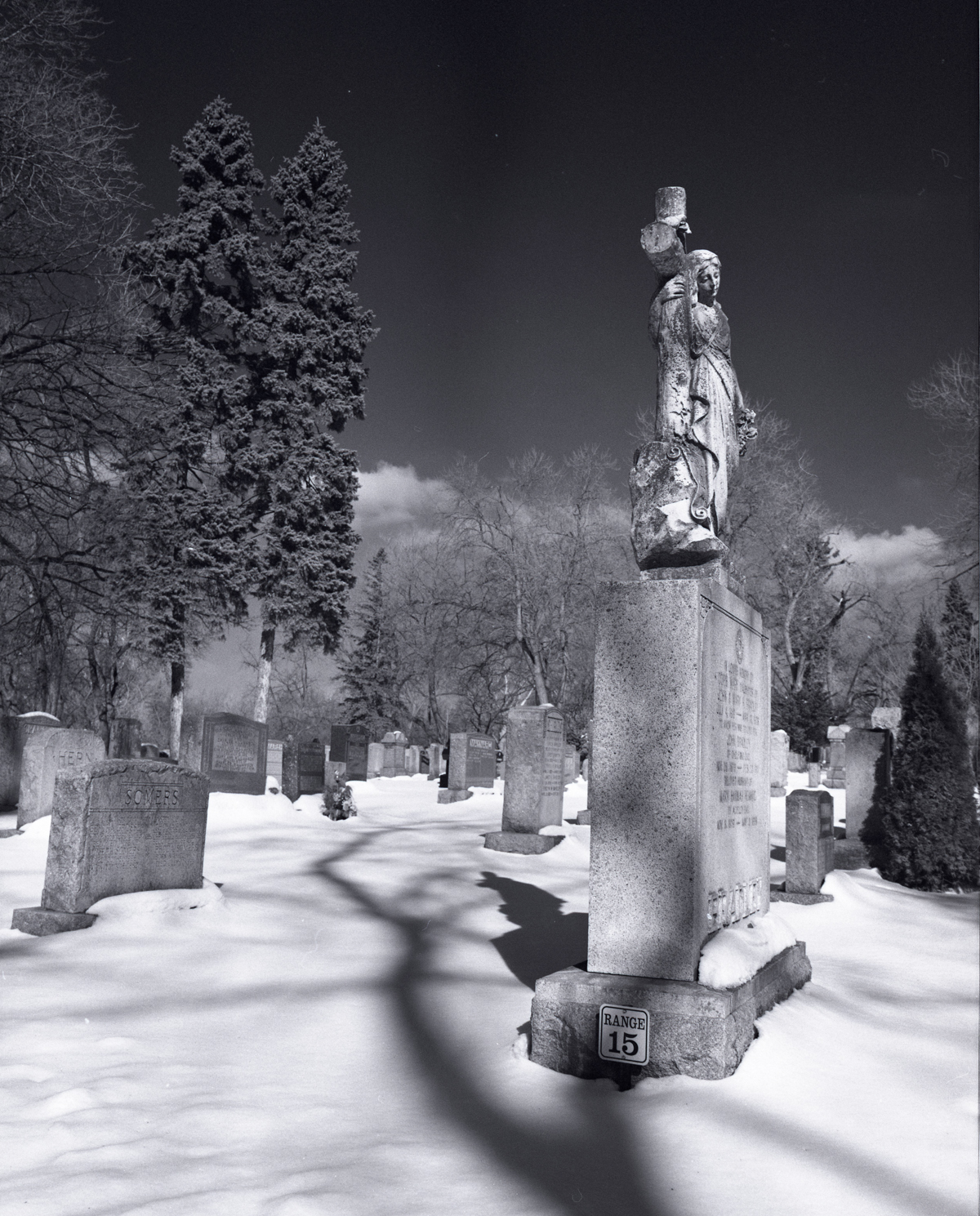
Some more images from last Sunday at the cemetery. These are from a roll of what I thought was Rollei Retro 400s, but it turns out it was 80s, so I was two stops under-exposed. I decided to do a two hour stand-develop in Rodinal as a push, and a lot of the roll turned out to be quite usable :-). All taken with my Mamiya RZ67, and 65mm/3.8 lens with 25A red filter


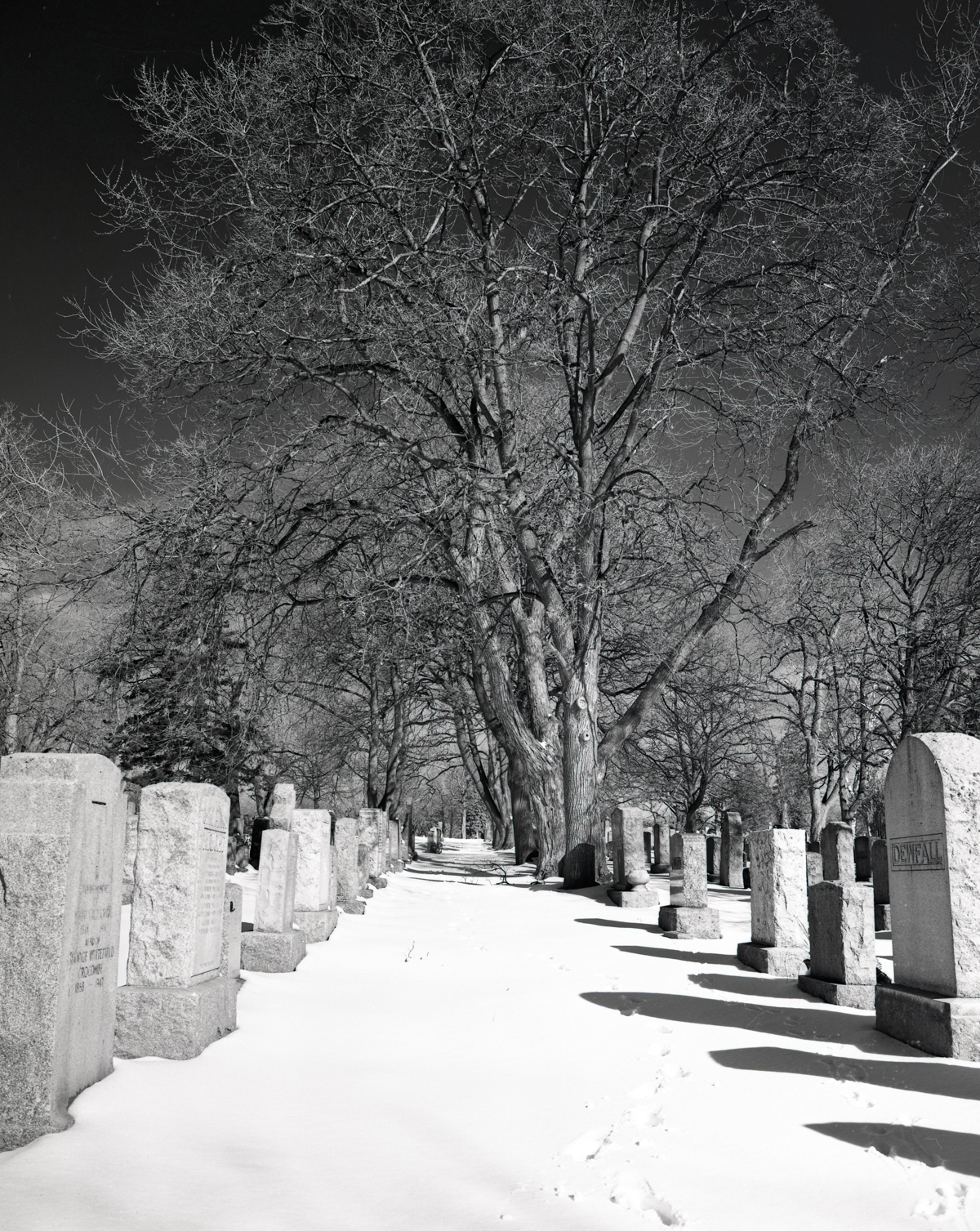
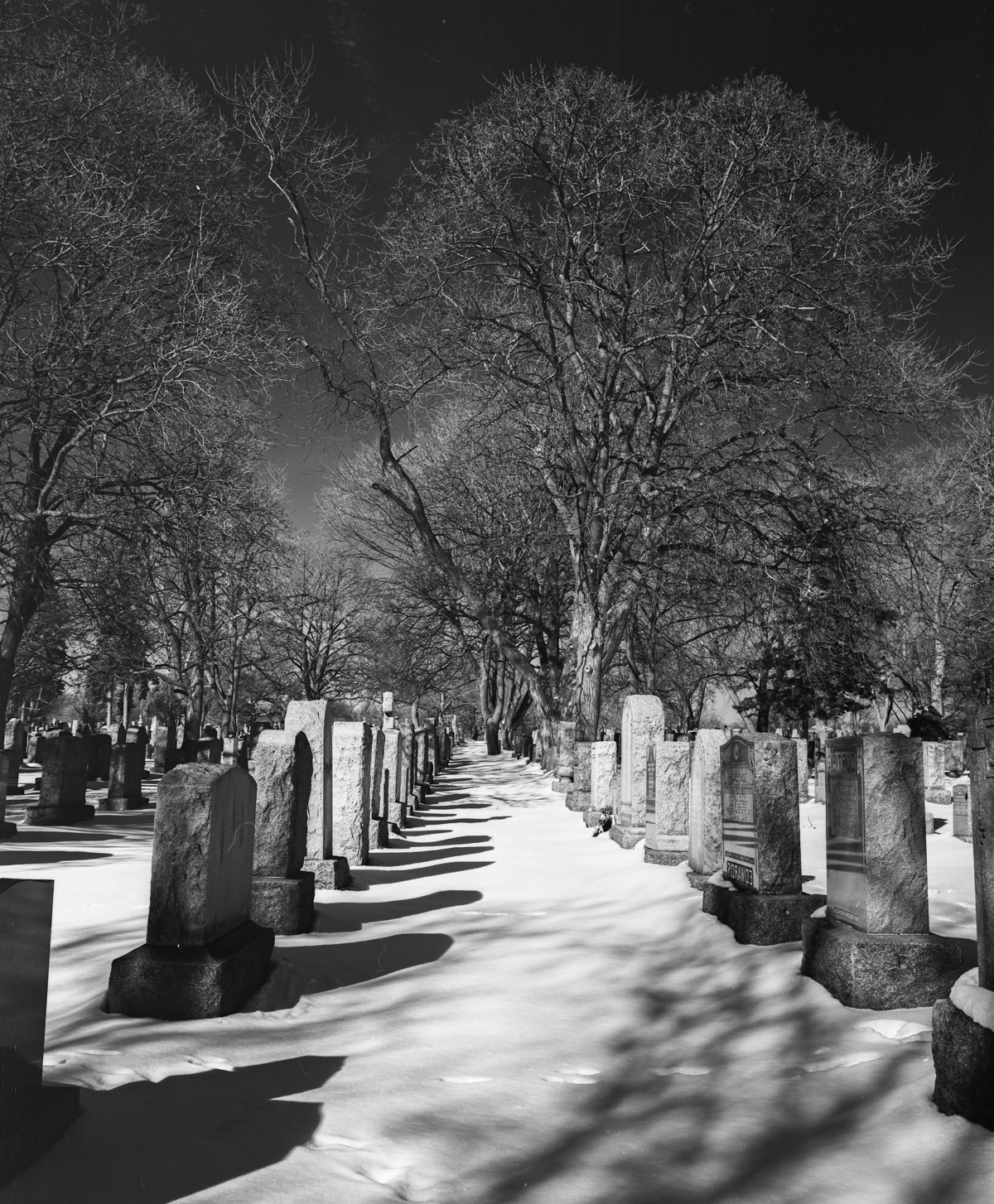
Yesterday I was out with some of my photography friends at a cemetery in the East end of Toronto. It a was a brilliantly sunny day, and the combination of the bright white snow and the dark sky (courtesy of the combination of a 25A red filter and Rollei Retro 400S film) provided a look I really liked. Images created with Mamiya RZ67 6×7 medium format camera and a 65mm/3.8 wide-angle lens.
Another image from one of the last rolls I put through my Mamiya 645 Pro TL before selling it. Shot on TMax 100 film, using the 45mm wide-angle lens.

 My Third Eye